
Form-Based Code
Background
Form-Based Codes (FBCs) are an innovative alternative to conventional zoning that focusing on the form of buildings rather than the land use. FBCs allow communities to code for character, protecting the existing character of an area and ensuring new development is compatible. Cities throughout the country have found FBCs to be a valuable tool in building strong, vibrant neighborhoods that provide numerous benefits to all stakeholders.
On December 17, 2008, City Council adopted a motion that directed the Department of City Planning to implement a Form-Based Code. This resulted in the Form-Based Code Study, which determined how FBCs could be incorporated into the existing Zoning Code. A consulting team consisting of Opticos Design Inc., glaserworks, Urban Design Associates, Hall Planning & Engineering, Urban Advisors, Brandt Retail Group, and Wise Economy Workshop helped assist the City Planning in the development of the Cincinnati FBC.
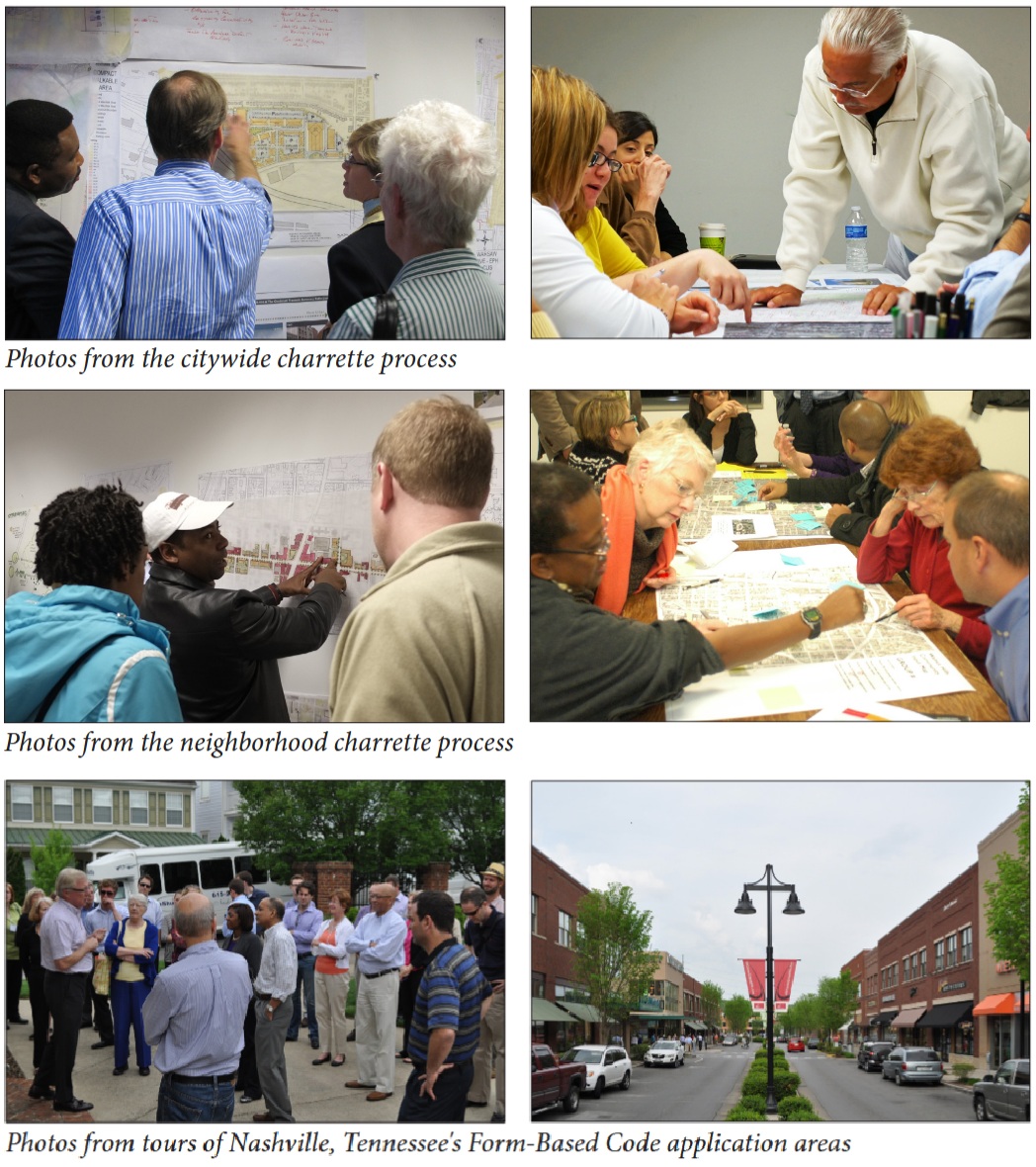
Under the leadership of Vice Mayor Roxanne Qualls, several initiatives began to educate and engage on FBC, including the FBC Working Group, which included neighborhood leaders, organizations, and City staff, and met from 2008-2012; five trips to Nashville, Tennessee to see a successful FBC in 2008; the Cincinnati FBC Initiative Working Group, which included planners, developers, and architects, and met from 2008-2012; as well as several stakeholder interviews conducted throughout the process.
A Citywide Charrette took place between April 28 and May 2, 2012, with over 700 people in attendance. At this event, the consultants and City staff worked with the public and various stakeholders to frame challenges and opportunities FBC to achieve the vision of Plan Cincinnati. On September 21, 2012 the “public review draft” of the FBC was made available to the public. In October of 2012, informational meetings were held at City Planning Commission and the Livable Communities Committee of City Council.
From October 29 to November 1, 2012, the four pilot neighborhoods went through a detailed visioning process with the consulting team and City staff called the “Neighborhood Charrette.” Hundreds of neighborhood residents and stakeholders attended and gave input. Detailed graphics were created for each vision and how it could be made possible using FBC.
The final draft of the FBC was released in February 2013. A special City Planning Commission meeting was held on March 7, 2013, where the Cincinnati Form-Based Code was approved with a few amendments. FBC was then approved at the Livable Communities Committee on May 7, 2013, and unanimously by the full City Council on May 8, 2013. Four neighborhoods implemented FBC: Madisonville (October 2013), College Hill (November 2013), Walnut Hills (January 2014), and Westwood (February 2014).
FBC Study Documents
- Reinforcing Community Character & Walkable Urbanism With Zoning (January 8, 2010)
- Existing Regulatory Obstacles For Form-Based Code Application (February 1, 2010)
- Form-Based Code Best Practices (March 1, 2010)
- Focus Neighborhoods Analysis (March 9, 2010)
- Form-Based Code Approach Options (March 10-11, 2010)
- Approach To Form-Based Code Application Staff Report (April 30, 2010)
- Approach To Form-Based Code Application Presentation (April 30, 2010)
- A Tool For Shaping Community Form & Smarter Growth (September 30, 2010)
- Creating A Form-Based Code To Preserve Community Character (October 2, 2010)